
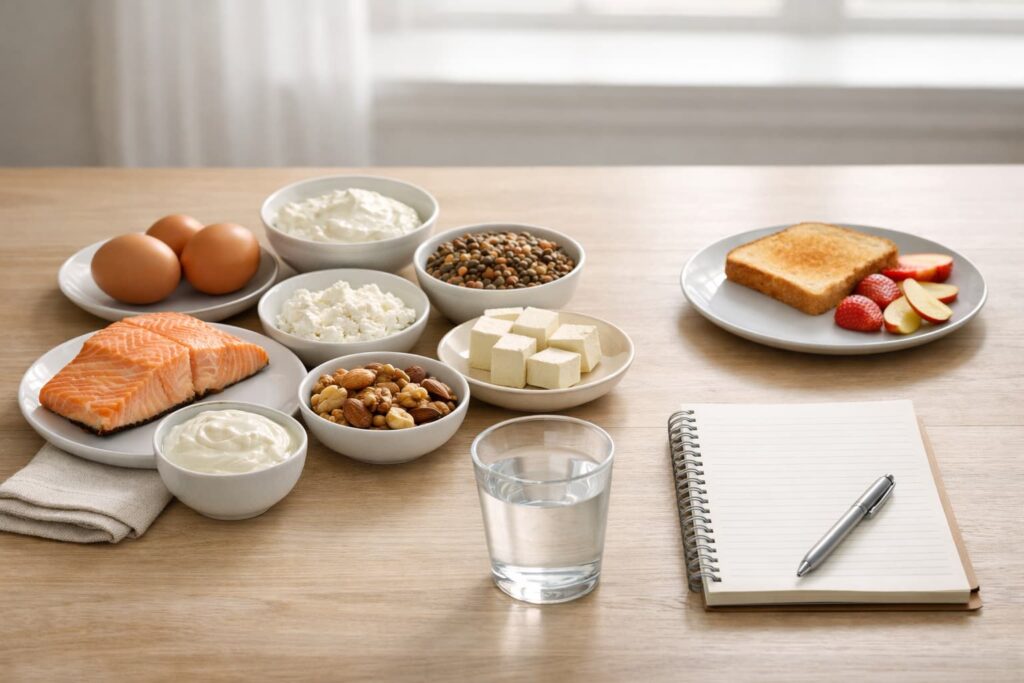
Signs you are not eating enough protein can include feeling hungry soon after meals, reduced muscle strength, slower workout recovery, fatigue, and changes in hair or nails. Protein helps build and maintain muscle, repair tissues, support immune function, and keep meals more satisfying, so a low intake can affect how you feel and function over time.
In many cases, low protein intake is mild rather than severe. That means the signs are often subtle at first. You may not notice one dramatic symptom. Instead, you may notice a pattern, especially if your meals are low in protein-rich foods like eggs, dairy, fish, poultry, beans, lentils, soy foods, nuts, and seeds.
Why Protein Matters So Much
According to MedlinePlus, protein is in every cell of the body and is needed to build and maintain bones, muscles, and skin. The body also uses amino acids from protein to grow, repair tissue, and carry out many normal processes.
Older adults may need to pay even closer attention. The National Institute on Aging notes that getting enough protein throughout the day helps support muscle maintenance with aging.
The Most Common Signs You Are Not Eating Enough Protein
You Feel Hungry Again Soon After Eating
One of the earliest signs you are not eating enough protein is poor meal satisfaction. Protein can help meals feel more filling, so when intake is too low, you may feel hungry again quickly or find yourself snacking more often between meals.
This does not mean every craving points to low protein. But if your meals are mostly refined carbs or low-protein snacks and you rarely feel full for long, it is worth looking at your protein intake.
Your Meals Do Not Keep You Full
Low-protein eating patterns often show up as a “bottomless stomach” feeling. Breakfast may wear off fast. Lunch may not hold you until dinner. You may keep reaching for snacks even when you recently ate.
This can happen because protein supports fullness better than meals built mostly around low-fiber starches or sugary foods. A meal with eggs, Greek yogurt, tofu, beans, fish, or chicken usually keeps people satisfied longer than toast, crackers, or cereal alone.
You Are Losing Muscle or Feeling Weaker
Protein is essential for building and maintaining muscle. If you are not eating enough, your body has less support for muscle repair and preservation.
You may notice:
- declining strength in workouts
- more difficulty carrying groceries or climbing stairs
- a softer or less toned look over time
- reduced performance in resistance training
This matters even more with aging because muscle naturally becomes harder to maintain over time. Low protein intake, especially when combined with too few calories or low physical activity, can make that worse.
You Are More Tired Than Usual
Fatigue is not specific to protein, but it can be one clue. When your diet is too low in protein, you may feel less steady energy, more weakness, or a harder time recovering from normal daily activity.
That said, fatigue can also happen with poor sleep, low calorie intake, iron deficiency, illness, stress, or dehydration. Protein should be considered as one possible factor, not the only explanation.
Your Workouts Feel Harder to Recover From
If you exercise regularly, one practical sign you are not eating enough protein is that your recovery feels slower than it should. You may stay sore longer, feel underpowered in later sessions, or notice that your strength progress has stalled.
Protein helps support muscle repair after training. If your daily intake is consistently low, recovery may suffer, especially when training volume is high or total calorie intake is also too low.
Your Hair, Skin, or Nails Seem More Fragile
Protein helps support body tissues, including hair, skin, and nails. In more significant deficiency states, clinical signs can include brittle hair, hair loss, or nail changes. But this is not a reliable standalone sign because these problems can also be linked to stress, illness, genetics, iron deficiency, and other nutrient gaps.
Use this as a supporting clue, not a diagnosis.
You Seem to Get Sick More Often
Protein helps support immune function. If intake is too low for long enough, immune defenses may be affected. Severe undernutrition is more clearly linked to increased infection risk, but even milder poor intake can be part of an overall eating pattern that leaves you run down.
If frequent illness shows up together with low appetite, unintended weight loss, weakness, and a poor-quality diet, low protein intake may be part of the picture.
You Notice Swelling in Severe Cases
This is not a common early sign, but it is an important one. In more severe protein deficiency, swelling can develop because protein helps regulate fluid balance in the body. Clinical sources describe edema as a possible sign of serious deficiency or malnutrition.
Swelling in the feet, legs, face, or abdomen should not be brushed off as a simple nutrition issue. It can also be related to heart, kidney, liver, or other medical problems and deserves medical attention.
Mild Low Intake vs Severe Protein Deficiency
This distinction matters.
Mildly low protein intake is more likely to show up as:
- hunger soon after meals
- low fullness
- weaker training recovery
- gradual muscle loss
- low energy
Severe protein deficiency is much less common in the United States and is usually tied to broader undernutrition, illness, or conditions that affect appetite, digestion, or absorption. In those cases, more serious signs such as swelling, major muscle wasting, frequent infections, or poor growth in children may appear.
Who May Be More Likely to Fall Short on Protein
Some people are more likely to eat too little protein without realizing it.
Older Adults
Appetite often drops with age, and some older adults eat smaller meals that do not contain much protein. The National Institute on Aging advises older adults to include protein foods across the day to help maintain muscle.
People Trying to Lose Weight
A calorie deficit can help with weight loss, but cutting too much food too fast can make protein intake fall with it. This is especially common when someone builds meals around salads, fruit, or snack foods without enough protein.
Vegetarians or Vegans With Poor Meal Planning
Plant-based diets can absolutely provide enough protein, but they need some planning. Relying mostly on low-protein grains, fruit, and vegetables without including beans, lentils, soy foods, nuts, seeds, or fortified soy dairy alternatives can leave intake low.
People With Low Appetite or Medical Issues
Chronic illness, digestive problems, dental issues, medication side effects, or difficulty shopping and cooking can all lower protein intake.
How Much Protein Do You Usually Need?
For healthy adults, a widely used baseline recommendation is about 0.8 grams of protein per kilogram of body weight per day. That is a minimum-style target meant to cover basic needs for most healthy adults, not necessarily an ideal target for every goal or life stage.
Food-based guidance from USDA MyPlate also helps make protein more practical. Depending on calorie needs, many adults fall around 5 to 7 ounce-equivalents of protein foods per day. MyPlate explains that 1 ounce-equivalent can count as:
- 1 ounce of meat, poultry, or seafood
- 1 egg
- 1 tablespoon of peanut butter
- 1/4 cup cooked beans, peas, or lentils
- 1/2 ounce of nuts or seeds
Your actual needs may be higher if you are very active, trying to build muscle, recovering from illness, or getting older.
Simple Clues That Your Daily Meals May Be Too Low in Protein
You do not need to track every gram to spot a likely issue. Your intake may be low if:
- most meals are built around bread, rice, cereal, or snacks with little protein added
- breakfast is usually just toast, fruit, or coffee
- lunch is often a salad with very little protein
- dinner includes only a small amount of protein foods
- you rarely eat beans, lentils, eggs, dairy, fish, meat, tofu, tempeh, or soy milk
- you are trying to eat less overall and protein disappeared with the calories
Easy Ways to Fix Low Protein Intake
Add Protein to Breakfast
Breakfast is a common weak spot. Easy upgrades include:
- eggs with toast and fruit
- Greek yogurt with nuts and berries
- cottage cheese with fruit
- oatmeal made with milk or fortified soy milk plus seeds
- tofu scramble
Build Meals Around a Protein Food First
Instead of asking what carb you are eating first, ask what protein is on the plate. Then add vegetables, fruit, and higher-fiber carbs around it.
Examples:
- chicken, rice, and vegetables
- salmon, potatoes, and broccoli
- lentils with roasted vegetables and yogurt
- tofu stir-fry with brown rice
- bean chili with a side salad
Use Protein-Rich Snacks When Needed
If meals are spaced far apart, better snacks can help:
- Greek yogurt
- edamame
- roasted chickpeas
- cheese
- hard-boiled eggs
- cottage cheese
- peanut butter with apple slices
Spread Protein Across the Day
The National Institute on Aging recommends getting enough protein throughout the day, not just at dinner. Many people do better when breakfast and lunch contain meaningful protein too.
When These Signs May Point to Something Else
This is important for accuracy and safety. Hunger, fatigue, hair shedding, weakness, and poor recovery do not automatically mean low protein.
Other possibilities include:
- too few total calories
- low iron intake
- poor sleep
- overtraining
- high stress
- thyroid problems
- illness or infection
- medication effects
If you have several signs at once and your diet is clearly low in protein foods, increasing protein is reasonable to consider. But if symptoms are significant, persistent, or unexplained, it is smart to speak with a healthcare professional.
When to Get Medical Advice
Get medical advice sooner if you have:
- unexplained swelling
- rapid or unintended weight loss
- major weakness
- trouble eating enough due to illness
- ongoing digestive symptoms
- signs of malnutrition
- repeated infections or poor wound healing
These can reflect more than just a low-protein diet.
A Simple One-Day Protein Check
A quick self-check can be helpful. Ask yourself:
- Did I eat a real protein source at breakfast?
- Did lunch include more than just carbs or vegetables?
- Did dinner include a meaningful protein food?
- Did I include beans, dairy, eggs, fish, poultry, tofu, tempeh, or another protein source at least a few times today?
- Am I relying mostly on snack foods, refined carbs, or very small meals?
If the answer is “not really” for most of these, your protein intake may be lower than you think.
FAQs
What are the first signs you are not eating enough protein?
The earliest signs are often increased hunger, feeling less full after meals, low energy, slower recovery from exercise, and gradual loss of strength or muscle.
Can low protein make you feel hungry all the time?
It can. Protein tends to help meals feel more satisfying, so meals that are very low in protein may leave you hungry again sooner.
Can you lose muscle if you do not eat enough protein?
Yes. Protein helps maintain muscle, especially during aging, exercise, or weight loss. Too little protein over time can make muscle loss more likely.
Does low protein always cause hair loss?
Not always. Hair changes can happen in more severe deficiency, but hair loss also has many other causes, including stress, illness, hormonal changes, and other nutrient deficiencies.
How can I tell if my breakfast is too low in protein?
If breakfast is mostly toast, cereal, fruit, or coffee and you are hungry again soon, it may be too low in protein. Adding eggs, yogurt, milk, soy foods, cottage cheese, or nuts can help.
Are plant foods enough to meet protein needs?
Yes, if meals are planned well. Beans, lentils, tofu, tempeh, edamame, soy milk, nuts, seeds, and whole grains can all contribute to adequate intake.
Should older adults pay more attention to protein?
Yes. Older adults are at higher risk of losing muscle with age, so regular protein intake across the day becomes especially important.
Conclusion
Signs you are not eating enough protein are usually subtle at first, but they can still matter. If you often feel hungry after meals, struggle with recovery, or notice declining strength, take a closer look at your daily food pattern. A few simple changes, like adding protein at breakfast and building meals around a clear protein source, can make your diet more satisfying and supportive.
If your symptoms are strong, persistent, or include swelling or unintended weight loss, talk with a healthcare professional for personalized advice.
This content is for informational purposes only and not medical advice.