
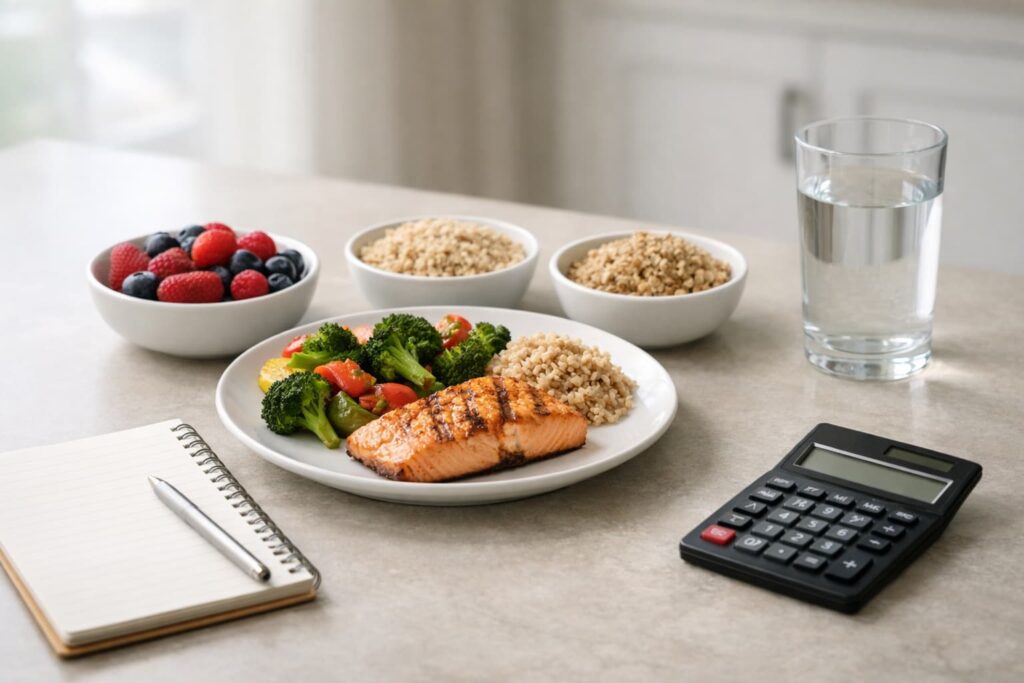
Most people do not need to cut carbs extremely low to lose weight. A better starting point is to create a calorie deficit, keep most of your carbs coming from fiber-rich foods, and choose an amount of carbs you can realistically maintain. Current U.S. guidance still places carbohydrates in the broader healthy range of 45% to 65% of daily calories, and the long-standing adult RDA is 130 grams per day as a general intake reference, not a weight-loss rule. Dietary Guidelines and the National Academies support those benchmarks.
Understanding how many carbs you need to lose weight matters because cutting too hard can make a plan miserable, while eating too many low-quality carbs can make hunger and calorie control harder. In practice, the best carb target is the one that helps you manage calories, feel satisfied, and stay consistent.
There Is No One Perfect Carb Number for Weight Loss
Weight loss happens when you consistently use more energy than you take in. The CDC emphasizes healthy eating patterns that fit your calorie needs rather than eliminating one food group, and the NIDDK Body Weight Planner is designed to help adults estimate a more personalized calorie target.
That means your carb needs depend on things like:
- Your calorie target
- Your activity level
- Your protein intake
- Your food preferences
- Whether you have diabetes or take glucose-lowering medicine
- Whether you are pregnant or breastfeeding
A lower-carb plan can work for some people because it reduces appetite or cuts out ultra-processed foods. A moderate-carb plan can work just as well for others because it feels easier to sustain.
A Simple Carb Range That Works for Many People
If you want a practical starting point, many adults do well with a moderate-carb approach of about 100 to 200 grams of carbs per day, adjusted to calorie needs and activity. That is not an official universal prescription, but it is a realistic working range for many weight-loss plans because it leaves room for fruit, beans, vegetables, yogurt, and whole grains without pushing carbs too high.
Here is a simple way to think about it:
| Weight-loss style | Approximate carbs per day | Who it may suit |
|---|---|---|
| Lower carb | 50–100 g | People who prefer fewer starches and feel less hungry this way |
| Moderate carb | 100–200 g | People who want flexibility and a balanced eating pattern |
| Higher carb but still structured | 200+ g | Very active people or those eating more calories overall |
The key point is that the best amount is the amount that helps you control calories and stay consistent. Official guidance does not say you must go very low carb to lose weight.
How Many Carbs Do I Need to Lose Weight Based on Calories?
A simple way to estimate carbs is to start with your calorie target and then choose what share you want from carbohydrates.
Because carbs provide 4 calories per gram, you can use this formula:
grams of carbs per day = (daily calories × carb percentage) ÷ 4
Here is what that looks like at common calorie levels:
| Daily calories | 30% carbs | 40% carbs | 45% carbs | 50% carbs |
|---|---|---|---|---|
| 1,200 | 90 g | 120 g | 135 g | 150 g |
| 1,500 | 113 g | 150 g | 169 g | 188 g |
| 1,800 | 135 g | 180 g | 203 g | 225 g |
| 2,000 | 150 g | 200 g | 225 g | 250 g |
This table shows why two people can both be “moderate carb” and still eat very different amounts. A smaller person aiming for 1,400 to 1,600 calories may feel good around 120 to 160 grams. A more active person may lose weight while eating much more.
Carb Quality Matters as Much as Carb Quantity
Not all carbs affect fullness, energy, and calorie control the same way. The American Heart Association explains that whole grains provide more fiber than refined grains, and fiber can help you feel full on fewer calories. USDA MyPlate also highlights whole grains as a source of fiber and other important nutrients.
Better carb choices for weight loss include:
- Non-starchy vegetables
- Beans, peas, and lentils
- Fruit
- Plain yogurt or milk
- Oats
- Brown rice
- Quinoa
- Whole-grain bread and pasta
- Potatoes in realistic portions
Carbs that often make weight loss harder include:
- Sugary drinks
- Desserts
- Oversized bakery items
- Candy
- Highly refined snack foods
- Large portions of chips, crackers, and sweet cereals
The Carbs to Cut First if You Want to Lose Weight
For many people, the fastest improvement comes from cutting added sugar and highly processed snack foods, not from avoiding every carb. The American Heart Association recommends limiting added sugar to no more than 25 grams per day for most women and 36 grams per day for most men.
A few common carb traps:
- Soda, sweet tea, energy drinks, and sweet coffee drinks
- “Healthy” granola bars that are mostly sugar
- Giant smoothies loaded with juice, syrups, and nut butters
- Restaurant portions of fries, white rice, or pasta
- Snack grazing that adds up without keeping you full
If you only make one change, start there.
A Smarter Way to Build Weight-Loss Meals
You do not need to count every carb forever. A simple plate method often works well.
Try this:
- Fill half your plate with non-starchy vegetables
- Fill one quarter with protein
- Fill one quarter with a higher-fiber carb
- Add a small amount of healthy fat if needed
Examples:
- Grilled chicken, broccoli, and a small baked potato
- Greek yogurt, berries, and oats
- Salmon, roasted vegetables, and quinoa
- Eggs, sautéed vegetables, and one slice of whole-grain toast
- Lentil bowl with chopped vegetables and plain yogurt
The CDC also uses meal-planning tools like the plate method and carb awareness to support blood sugar management, which can be useful even for people without diabetes who want more structure.
How to Know if Your Carb Intake Is Too High
Your carbs may be too high for your goal if you notice patterns like:
- You are not losing weight after several weeks
- You feel hungry again soon after eating
- Most of your carbs come from refined or sugary foods
- Your meals are low in protein and fiber
- Your portions keep creeping up
- Liquid calories are common in your day
That does not always mean you need “low carb.” It may simply mean you need better portions, better food quality, or a more accurate calorie target.
How to Know if Your Carb Intake Is Too Low
Going too low can backfire. Your carbs may be too low if you feel:
- Tired during workouts
- Irritable or mentally foggy
- Constipated
- Constantly preoccupied with food
- Unable to sustain the plan
- More likely to binge on sweets or starches later
This is especially relevant for active people. The National Academies still place adult carbohydrate intake in the 45% to 65% AMDR, and very active people often need more carbs to support training and recovery.
Should You Go Low Carb to Lose Weight?
A low-carb diet can help some people lose weight, but it is not required.
A lower-carb approach may work well if:
- You naturally prefer protein, vegetables, and simple meals
- You tend to overeat bread, sweets, or snack foods
- Lower-carb meals keep you fuller longer
A moderate-carb approach may work better if:
- You exercise regularly
- You enjoy fruit, beans, oats, or whole grains
- Very restrictive plans make you quit
- You want a more flexible long-term routine
The winning plan is usually the one you can repeat for months, not the one that looks most aggressive for one week.
How Much Fiber Should You Aim for?
Fiber is technically a carbohydrate, but it behaves differently than refined carbs and often helps with fullness. The World Health Organization says people older than age 10 should aim for at least 25 grams of naturally occurring dietary fiber per day, and the CDC notes that fiber is part of a healthy diet and can support better health.
Good fiber-rich carb foods include:
- Beans and lentils
- Berries
- Apples and pears
- Oats
- Chia seeds
- Vegetables
- Whole grains
- Potatoes with skin
Who Should Be More Careful With Carb Cutting?
You should be more careful and consider medical guidance before making big carb cuts if you are:
- Pregnant
- Breastfeeding
- Taking insulin
- Taking diabetes medicines that can lower blood sugar
- Training hard most days
- Recovering from disordered eating
- Underweight or losing weight unintentionally
The NIDDK Body Weight Planner is intended for adults and is not meant for pregnant or breastfeeding women, and CDC diabetes resources recommend more individualized carb planning for people managing blood sugar.
A Practical Carb Target to Start With
If you want a simple answer, start here:
If you want the easiest default starting point
Aim for about 30% to 45% of calories from carbs during weight loss, with most carbs coming from vegetables, fruit, beans, dairy, and whole grains.
For many adults, that lands around:
- 90 to 150 grams per day on lower-calorie plans
- 120 to 180 grams per day on moderate-calorie plans
- 150 to 225 grams per day on higher-calorie or more active plans
Then adjust based on results, hunger, energy, and adherence.
If you do not want to track grams
Use this meal pattern:
- 1 to 2 fist-sized portions of higher-fiber carbs per meal
- Protein at every meal
- Vegetables at most meals
- Little or no sugary drinks
- Minimal dessert and snack grazing
A 1-Day Example of Weight-Loss Carbs
Here is one balanced day at roughly moderate carb intake:
Breakfast: Plain Greek yogurt, berries, and a small serving of oats
Lunch: Chicken salad bowl with vegetables, beans, and olive oil dressing
Snack: Apple with a small portion of nuts
Dinner: Salmon, roasted broccoli, and a small baked potato
Dessert: Optional fruit
This kind of day gives you carbs, but mostly from filling foods that bring fiber, volume, and better nutrition.
Common Mistakes People Make With Carbs and Weight Loss
Cutting carbs but not calories
You can go low carb and still overeat calories through oils, cheese, nuts, or oversized portions.
Counting only bread and rice
Carbs also come from drinks, sauces, desserts, snack foods, and large fruit smoothies.
Eating too little protein
Meals that are too carb-heavy and low in protein may leave you hungry sooner.
Forgetting fiber
A carb target built mostly around refined foods often feels much harder than the same carb amount built around high-fiber foods.
Going too strict too fast
If your plan feels impossible by day four, it probably needs more flexibility.
FAQs
Is 100 grams of carbs a day good for weight loss?
For many people, yes. It can be a workable middle ground between very low carb and a standard higher-carb diet. Whether it works depends on your calorie intake, activity level, and food choices.
How many carbs should a woman eat a day to lose weight?
There is no single number for all women. A common starting range is about 90 to 150 grams per day on a lower-calorie plan, then adjusted based on hunger, energy, and results.
How many carbs should a man eat a day to lose weight?
There is no one fixed number for all men either. Many men start around 120 to 180 grams per day, but larger or more active men may do well with more.
Do I need to avoid fruit to lose weight?
No. Fruit can fit into a weight-loss plan. Whole fruit usually works much better than juice because it provides more fiber and is generally more filling.
Are carbs at night bad for weight loss?
Not automatically. Total daily intake matters more than the time of day. A carb-rich evening meal can still fit your plan if your calories and portions are appropriate.
Is keto necessary for weight loss?
No. Some people lose weight on keto, but it is not required. Many people lose weight with moderate-carb eating that feels easier to sustain.
What is the best carb source for weight loss?
There is not just one. The best carb sources are usually the ones that bring fiber and help control appetite, such as beans, fruit, vegetables, oats, and whole grains.
Conclusion
The best answer to how many carbs do I need to lose weight is this: enough to support your energy and consistency, but not so much that calories become hard to control. For most people, that means focusing less on extreme carb restriction and more on better carb quality, realistic portions, and a calorie target you can actually maintain.
If you want to make progress, start by cutting sugary drinks and low-quality snack carbs, build meals around protein and vegetables, and choose a moderate carb intake that still feels livable.
This content is for informational purposes only and not medical advice.