
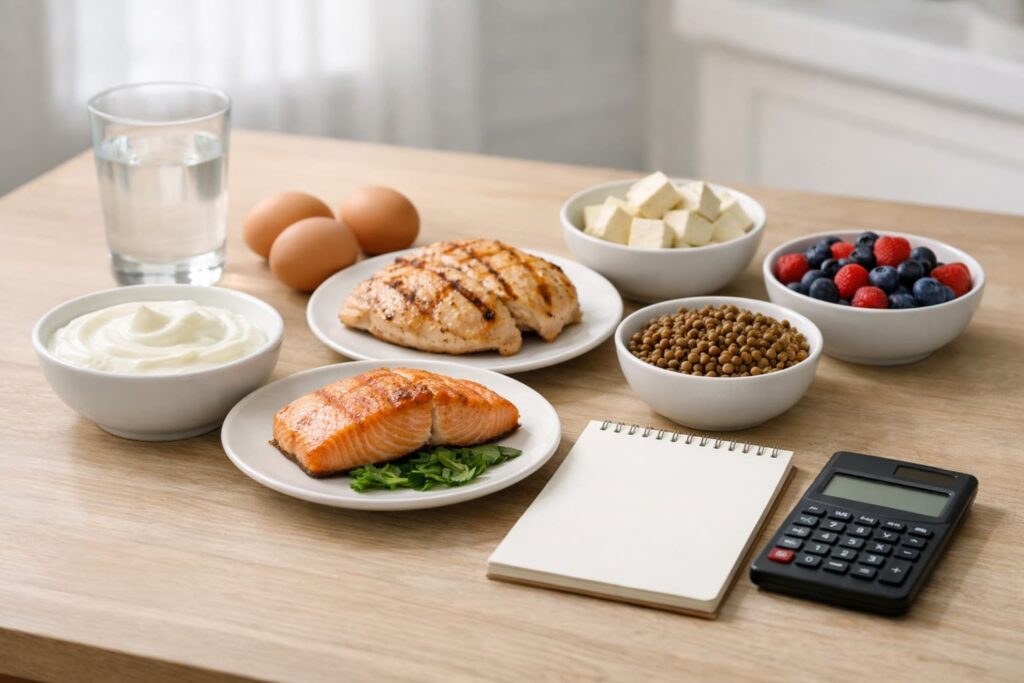
For many adults trying to lose weight, a practical target is about 1.2 to 1.6 grams of protein per kilogram of body weight per day. That is higher than the general minimum protein recommendation of 0.8 g/kg/day, and it can make weight loss easier by helping you stay full and hold on to more lean muscle while eating fewer calories. According to PubMed, this higher-protein range may support appetite control, weight management, and body composition during calorie restriction.
That does not mean you need an extreme high-protein diet. The goal is to get enough protein, spread it well across the day, and build it into a balanced eating pattern with vegetables, fruit, whole grains, and regular activity. The NIDDK and the Dietary Guidelines for Americans both emphasize that lasting weight loss works best when your overall eating pattern is realistic and sustainable.
Why protein matters for weight loss
Protein helps with weight loss for a few simple reasons.
- It usually helps you feel fuller than refined carbs or low-protein meals.
- It helps protect lean body mass when you are in a calorie deficit.
- It can make meals more satisfying, which may help some people snack less later.
Research reviews consistently show that protein intakes around 1.2 to 1.6 g/kg/day are a useful target for body-weight management, especially when calories are controlled. The same PubMed review also notes that aiming for roughly 25 to 30 grams of protein per meal is a practical way to reach that daily target.
The basic protein recommendation vs. a weight-loss target
The general adult recommendation is much lower than what many people use for weight loss.
- General minimum for healthy adults: 0.8 g/kg/day
- Common weight-loss target: 1.2 to 1.6 g/kg/day
- People doing regular resistance training: often benefit from the upper end of that range
- Some older adults: may benefit from at least 1.0 to 1.2 g/kg/day because muscle loss risk is higher with aging
A key point: the minimum recommendation is designed to cover basic needs, not to optimize fullness, dieting comfort, or muscle retention during fat loss. The Dietary Guidelines for Americans explain the baseline adult recommendation, while research reviews suggest higher amounts may be more useful during intentional weight loss.
How much protein should I eat to lose weight based on body weight?
Use this simple formula:
Body weight in kilograms × 1.2 to 1.6 = grams of protein per day
If you know your weight in pounds, divide by 2.2 first to get kilograms.
Quick examples
- 120 lb (54.5 kg): about 65 to 87 g/day
- 140 lb (63.6 kg): about 76 to 102 g/day
- 160 lb (72.7 kg): about 87 to 116 g/day
- 180 lb (81.8 kg): about 98 to 131 g/day
- 200 lb (90.9 kg): about 109 to 145 g/day
These are practical examples based on the research-supported 1.2 to 1.6 g/kg/day range discussed in the PubMed review on protein and weight management.
A simple way to choose your target
You do not need to hit the exact same number every day. A practical approach looks like this:
Choose the lower end if you:
- are new to tracking protein
- prefer smaller meals
- are not doing strength training consistently
- want an easier starting point
A good starting target is 1.2 to 1.4 g/kg/day.
Choose the higher end if you:
- are in a calorie deficit
- lift weights or do resistance training
- want to protect muscle while losing fat
- are older and trying to maintain strength and function
A more aggressive but still practical target is 1.5 to 1.6 g/kg/day. Another large review indexed in PubMed suggests benefits tend to level off around this point for many adults rather than continuing to rise.
How much protein per meal is best?
For many adults, spreading protein across the day works better than trying to cram it all into dinner.
A practical pattern is:
- 20 to 35 grams per meal for many people
- 25 to 30 grams per meal is a useful target mentioned in weight-management research
- add a protein-rich snack if needed to reach your daily total
Example day for someone aiming for about 100 grams:
- breakfast: 25 g
- lunch: 30 g
- snack: 15 g
- dinner: 30 g
This usually feels easier than chasing one huge protein-heavy meal at night.
Best protein foods for weight loss
The best protein foods for weight loss are the ones that help you hit your target without pushing calories too high.
Lean animal protein options
- chicken breast
- turkey
- fish and seafood
- eggs
- Greek yogurt
- cottage cheese
Plant protein options
- tofu
- tempeh
- edamame
- beans
- lentils
- soy milk
- nuts and seeds in sensible portions
The USDA MyPlate Protein Foods Group lists simple equivalents that can help with meal planning. For example, 1 egg, 1 ounce of meat, 1 tablespoon of peanut butter, 1/4 cup cooked beans, and 1/4 cup tofu each count as about 1 ounce-equivalent in the protein foods group.
High-protein meals that support weight loss
Here are easy ways to build higher-protein meals without making them overly complicated.
Breakfast ideas
- Greek yogurt with berries and chia seeds
- eggs with vegetables and whole-grain toast
- oatmeal made with milk plus a side of cottage cheese
- protein smoothie with milk or soy milk, yogurt, and fruit
Lunch ideas
- grilled chicken salad with beans
- turkey wrap with vegetables
- tuna bowl with rice and chopped vegetables
- lentil soup with a side of yogurt
Dinner ideas
- salmon with potatoes and broccoli
- tofu stir-fry with mixed vegetables
- lean beef or turkey chili with beans
- baked chicken with quinoa and roasted vegetables
The Dietary Guidelines for Americans recommend getting protein from nutrient-dense foods as part of an overall healthy eating pattern, not from protein alone.
Protein and calorie balance: what actually drives fat loss?
Protein helps, but it does not replace calorie balance.
You still need a calorie intake that fits your goal. The NIDDK explains that weight loss works best with a healthy eating plan you can maintain over time, along with regular physical activity. Protein makes that plan easier for many people, but it is not magic.
A useful rule is this:
- keep protein high enough to support fullness and muscle
- keep portions realistic
- fill the rest of your plate with vegetables, fruit, high-fiber carbs, and healthy fats
Does eating more protein help you lose belly fat?
Protein can support overall fat loss, but you cannot target belly fat with protein alone.
Higher-protein, calorie-controlled diets may help reduce body fat and preserve lean mass better than lower-protein versions in some studies. But where fat comes off first is influenced by genetics, hormones, age, sleep, stress, and total energy balance.
That is why the best results usually come from combining:
- enough protein
- a sustainable calorie deficit
- strength training
- walking or other regular activity
- adequate sleep
Protein and strength training work especially well together
If you are trying to lose fat without losing muscle, protein matters even more when paired with resistance training.
Research indexed in PubMed shows that added protein supports lean mass and strength gains, with benefits leveling off for many people at around 1.6 g/kg/day. The NIDDK also recommends muscle-strengthening activity on at least 2 days per week as part of a healthy routine.
So if your goal is to look leaner, feel stronger, and avoid the “skinny but soft” outcome, protein plus strength training is usually a better strategy than dieting alone.
Who may need more care with higher-protein diets?
Higher protein is not the right fit for everyone.
You should be more careful if you have:
- chronic kidney disease
- kidney failure
- a medically prescribed renal diet
- certain metabolic or digestive conditions
- advice from your clinician to limit protein
The NIDDK notes that some people with chronic kidney disease may need moderate amounts of protein so waste does not build up in the blood. Protein advice can also differ for dialysis patients, so a general weight-loss target may not apply.
Safety box
A higher-protein plan may help with weight loss, but it is not a one-size-fits-all prescription. If you have kidney disease, are on dialysis, are pregnant, have a history of disordered eating, or are managing a medical condition, get individualized guidance before making a major change to your protein intake. The safest target is the one that fits your health status, calorie needs, and overall diet quality.
Common mistakes when increasing protein for weight loss
1. Increasing protein but ignoring calories
Protein bars, nut butters, cheese, and restaurant portions can add up fast. More protein does not always mean fewer calories.
2. Eating very little fiber
Some people raise protein by cutting out too many fruits, vegetables, beans, or whole grains. That can hurt fullness and make the diet harder to stick with. The Dietary Guidelines for Americans emphasize overall dietary pattern quality, not protein in isolation.
3. Saving almost all protein for dinner
A more even spread across meals is usually easier and may better support fullness and muscle maintenance.
4. Relying only on shakes
Protein powder can be convenient, but whole foods often bring more vitamins, minerals, fiber, and staying power.
A simple step-by-step protein plan for weight loss
Step 1: Calculate your daily target
Multiply your body weight in kilograms by 1.2 to 1.6.
Step 2: Divide it across the day
Aim for 3 to 4 protein-rich eating times rather than one giant meal.
Step 3: Build meals around protein first
Start with:
- eggs, yogurt, chicken, fish, tofu, lentils, or beans
Then add:
- vegetables or fruit
- a high-fiber carb
- a reasonable amount of healthy fat
Step 4: Pair protein with activity
Try to include walking and at least 2 days per week of strength-focused exercise, which aligns with activity advice from the NIDDK.
Step 5: Adjust based on results
If you are too hungry, losing strength, or struggling to recover from workouts, your protein intake may be too low for your current diet and activity level.
People also ask
Is 100 grams of protein a day good for weight loss?
For many adults, yes. It can be a solid target, but whether it is enough depends on your body weight, calorie intake, age, and training level. For a 160-pound person, 100 grams lands near the middle of the commonly suggested weight-loss range.
How much protein should a woman eat to lose weight?
The answer depends more on body weight and activity than on sex alone. Many women trying to lose weight do well around 1.2 to 1.6 g/kg/day, then adjust based on appetite, training, and progress.
How much protein should a man eat to lose weight?
The same body-weight-based rule works well for men too. Larger men often need more total grams simply because they weigh more.
Can too much protein slow weight loss?
It can if it pushes calories too high. Protein is useful, but calorie surplus still matters. Weight loss usually works best when protein is high enough, not unlimited.
Do I need protein powder to lose weight?
No. Many people can meet their needs through food alone. Protein powder is just a convenience tool when meals are rushed or your daily intake falls short.
Conclusion
Protein can make weight loss more effective and more comfortable, but it works best when it is part of a balanced plan. For most adults, 1.2 to 1.6 grams per kilogram of body weight per day is a practical target that supports fullness and helps preserve muscle while dieting.
Start by calculating your target, spread protein across your meals, and combine it with a realistic calorie deficit and regular strength training. That is usually the sweet spot between “not enough” and “more than you really need.”
FAQ
1. What is the minimum protein intake for adults?
The general minimum recommendation for healthy adults is 0.8 grams per kilogram of body weight per day, but many people aiming for weight loss choose a higher target.
2. Is 1.6 g/kg too much protein?
For many healthy active adults, no. Research often shows this is near the upper end of the practical range where benefits level off, especially with resistance training.
3. Should I eat protein at every meal?
That is often a smart approach. Spreading protein across the day can make it easier to hit your goal and may better support fullness and muscle retention.
4. Are plant proteins good for weight loss?
Yes. Beans, lentils, tofu, tempeh, edamame, soy milk, nuts, and seeds can all help, especially when they fit your calories and meal pattern. The Dietary Guidelines support a variety of protein foods, including plant-based choices.
5. How do I convert pounds to kilograms for protein planning?
Divide your weight in pounds by 2.2. Then multiply the result by 1.2 to 1.6 to estimate a useful daily protein target.
6. Can older adults benefit from higher protein during weight loss?
Often yes. Reviews commonly suggest around 1.0 to 1.2 g/kg/day for healthy older adults, with some people needing more under professional guidance to support muscle and function.
7. Who should talk to a clinician before increasing protein?
Anyone with chronic kidney disease, kidney failure, a renal diet, or another medical condition that affects protein needs should get personal advice first.
This content is for informational purposes only and not medical advice.