
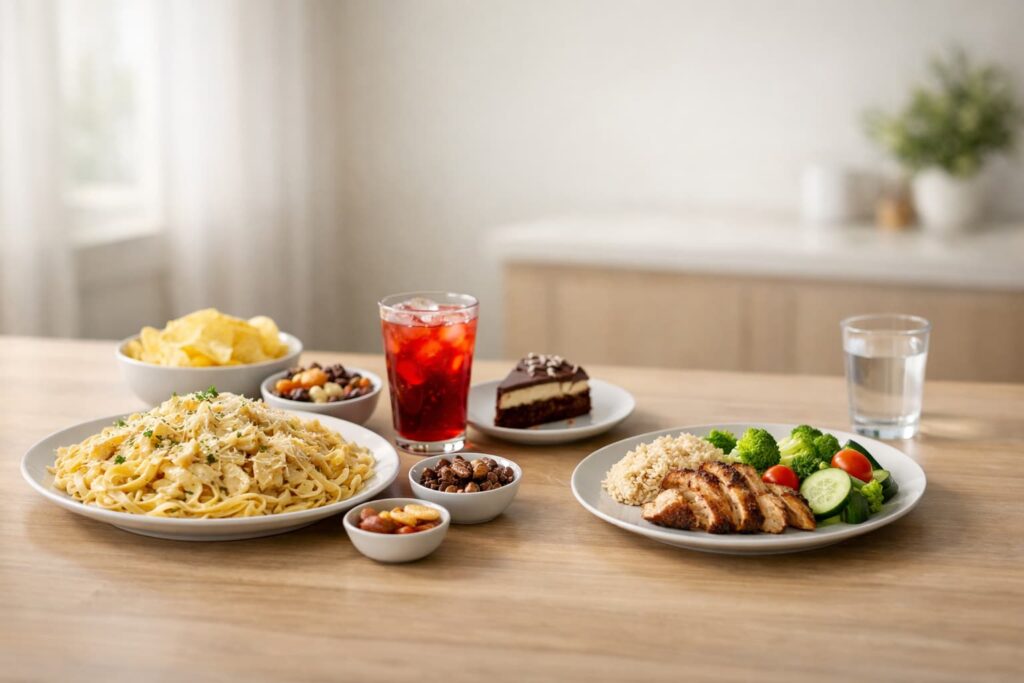
Signs you may be eating too many calories often include gradual weight gain, larger portions than you realize, frequent snacking without real hunger, regular intake of high-calorie drinks, and often feeling overly full after meals. Understanding these signs matters because a consistent calorie surplus can affect weight, energy balance, and long-term health over time. The good news is that a few practical checks can help you spot the pattern early, including looking at portion sizes, drink choices, meal habits, and how your intake matches your activity level. According to the CDC, weight management comes down to balancing the calories you eat with the calories your body uses, while the NIDDK notes that sleep, medicines, and health conditions can also affect body weight.
What It Really Means to Eat Too Many Calories
Eating too many calories does not mean one big meal ruined your progress. It usually means your body is regularly getting more energy from food and drinks than it uses over time. The NHS explains that when the calories you eat and drink are consistently higher than the calories you use, body weight may go up. The CDC also notes that physical activity increases the number of calories your body uses for energy.
That does not mean every weight change is caused only by food. The NIDDK says body weight can also be influenced by lifestyle habits, sleep, medicines, health problems, family history, and daily environment. That is why the signs below are clues, not a diagnosis by themselves.
The Most Common Signs You May Be Eating Too Many Calories
Gradual Weight Gain Over Time
This is one of the clearest signs. If your weight is trending up over weeks or months and you have not recently increased muscle-building exercise, a steady calorie surplus may be part of the reason. The NHS says weight gain is often gradual and happens when extra calories are stored in the body as fat.
A small increase may not feel obvious day to day, which is why this pattern often goes unnoticed until clothes fit differently or your usual routine feels less comfortable.
Your Portions Keep Getting Bigger
Portion creep is common. A bowl gets fuller, snacks get less measured, and restaurant meals become your new idea of a normal serving. The NIDDK recommends learning the difference between a portion and a serving and using the Nutrition Facts label to understand how much you are actually eating.
This matters because even nutritious foods can push calories too high when portions keep expanding. Nuts, nut butter, trail mix, smoothies, granola, avocado, olive oil, and restaurant salads with heavy toppings are common examples.
You Snack or Graze Even When You Are Not Really Hungry
Frequent nibbling can quietly raise your daily calorie intake. Sometimes it happens because of boredom, stress, habit, or convenience rather than physical hunger. The CDC advises eating only when you are truly hungry and minimizing distractions because distractions can make it easier to miss how quickly and how much you are eating.
If you often eat while scrolling, driving, working, or watching TV, you may be consuming more than you notice.
You Often Feel Stuffed After Meals
Feeling comfortably satisfied after eating is different from feeling heavy, overly full, or uncomfortable on a regular basis. Repeatedly eating past fullness can suggest that meals are too large, too fast, or too calorie-dense.
This sign is especially important when it happens often, not occasionally. Holiday meals and celebrations are normal. A daily pattern is what matters.
You Drink More Calories Than You Think
Liquid calories are easy to overlook because they are not always as filling as solid food. Sugary coffee drinks, soda, juice drinks, smoothies, alcohol, energy drinks, and sweetened tea can add a large number of calories without making you feel like you ate much. The CDC includes beverage choices as part of healthy eating for a healthy weight. The Dietary Guidelines for Americans also advises limiting added sugars and staying within calorie limits.
For many people, cutting back on high-calorie drinks is one of the fastest ways to lower total intake without changing every meal.
Your Intake Does Not Match Your Activity Level
A food pattern that worked for you during a more active season of life may be too much later on. The Dietary Guidelines for Americans and MyPlate both emphasize that calorie needs vary by age, sex, body size, and physical activity level.
That means you can be eating a seemingly reasonable amount and still be in a surplus if your movement has dropped, your routine changed, or your portions stayed the same while your energy needs went down.
Signs You May Be Eating Too Many Calories Even If Your Food Looks “Healthy”
Healthy foods can absolutely fit into a balanced routine, but they still contain calories. You may be eating too many calories if:
- your smoothie is more like a large meal plus dessert
- your salads are loaded with fried toppings, cheese, creamy dressing, and oversized portions
- your snacks are nutrient-dense but easy to overeat, like nuts, dried fruit, or granola
- your cooking uses more oil, butter, sauces, or extras than you realize
The NHS notes that many people eat and drink too many calories while also not getting enough fiber and other helpful nutrients. That is an important point: eating too many calories and eating well are not the same thing.
Why No Single Sign Proves It
It is tempting to assume that weight gain, hunger changes, or low energy automatically mean you are overeating. Real life is more complicated. The NIDDK explains that sleep, medicines, health conditions, and family history also affect body weight, while the CDC includes sleep and stress reduction as part of achieving and maintaining a healthy weight.
That is why the best approach is to look for patterns, not react to one day, one meal, or one number on the scale.
Practical Ways to Check Whether Calories May Be Too High
Look at Portion Sizes Honestly
Use measuring cups, a food scale for a few days, or the serving size on the label to compare what you usually eat with what counts as one serving. The NIDDK specifically recommends reading Nutrition Facts labels and understanding the difference between servings and portions.
Pay Attention to Liquid Calories
Write down everything you drink for a few days. Many people remember meals but forget lattes, juice, soda, sports drinks, and alcohol.
Notice When You Eat Without Hunger
The CDC recommends minimizing distractions, eating slowly, and eating only when you are truly hungry. A simple hunger check before eating can help: am I physically hungry, or am I stressed, bored, tired, or just in the habit of snacking right now?
Compare Your Intake With Your Routine
If your job has become more sedentary, your workouts are less frequent, or you are moving less overall, your calorie needs may be lower than they used to be. The CDC notes that more physical activity increases the number of calories your body uses.
Use a Trusted Planning Tool
The CDC points readers to MyPlate Plan as a place to identify what to eat, how much to eat from each food group, and how to stay within a recommended calorie allowance.
Common Habits That Quietly Raise Calories
Mindless Eating
Eating while distracted can make it easier to overeat. This is one of the most practical and overlooked signs.
Frequent Restaurant or Takeout Meals
Large portions, added sauces, extra oils, and combo meals can push calories up fast, even when the meal sounds reasonable.
Eating Very Fast
Fast eating can make it harder to notice fullness before you have already eaten more than you needed.
Regular High-Calorie Extras
Small additions count. Creamers, dressings, dips, cooking oils, cheese, sauces, sweets at work, and a handful here and there can add up over a full week.
What to Do if These Signs Sound Familiar
You do not need a crash diet. A better plan is to make your intake easier to see and easier to manage.
Start With These Simple Changes
- keep meal portions more consistent
- include more vegetables, fruit, beans, and other higher-fiber foods
- choose water or lower-calorie drinks more often
- slow down at meals
- reduce distracted eating
- pre-portion snacks instead of eating from large containers
- check labels for serving size and calories
- match meals and snacks more closely to your actual activity level
The Dietary Guidelines for Americans recommends a nutrient-dense dietary pattern that stays within calorie limits, and the CDC suggests tools such as food diaries and meal planning to help track meals and snacks.
When to Take Weight Changes More Seriously
If you are gaining weight rapidly, having major swelling, feeling unwell, or noticing big changes without clear eating-pattern changes, it is smart to speak with a qualified healthcare professional. Since medicines, sleep problems, hormonal issues, and other medical factors can affect body weight, not every change is just about calories. The NIDDK supports this broader view.
Frequently Asked Questions
Can I Be Eating Too Many Calories Even If I Eat Healthy Foods?
Yes. Foods can be nutritious and still provide more calories than your body needs if portions are large enough or extras add up throughout the day.
Is Feeling Hungry All the Time a Sign of Eating Too Many Calories?
Not necessarily. Hunger can be affected by meal composition, sleep, stress, routine, and food quality. A high-calorie eating pattern is more often suggested by patterns such as weight gain, frequent overeating, and large portions than by hunger alone. The NIDDK notes that many factors affect weight and eating patterns.
Are Liquid Calories Really That Important?
Yes. Drinks can add significant calories without being very filling. Sweetened coffee drinks, soda, alcohol, juice drinks, and smoothies are common sources.
How Can I Tell if My Portions Are Too Big?
Compare what you usually eat with the serving size on the label, or measure your portions for a few days. Many people find they are eating more than they thought.
Does Eating Too Many Calories Always Cause Immediate Weight Gain?
No. Weight changes are usually gradual and can also be influenced by sleep, stress, health conditions, medicines, and activity level.
Is One Overeating Day a Problem?
Usually no. One big day is less important than a repeated pattern over time. The bigger issue is a consistent calorie surplus, not a single meal or celebration.
What Is the Easiest First Step?
For many people, the easiest first step is checking liquid calories and portion sizes. Those two changes alone can reveal a lot.
Conclusion
The clearest signs you may be eating too many calories are not dramatic. They are usually small patterns that repeat: gradual weight gain, bigger portions, extra snacking, liquid calories, and eating past fullness more often than you realize. The sooner you notice those patterns, the easier it is to make practical changes without extreme rules. Start by looking honestly at portions, drinks, distractions, and how your intake matches your daily movement, then build from there.